06.03.2026
10 mins
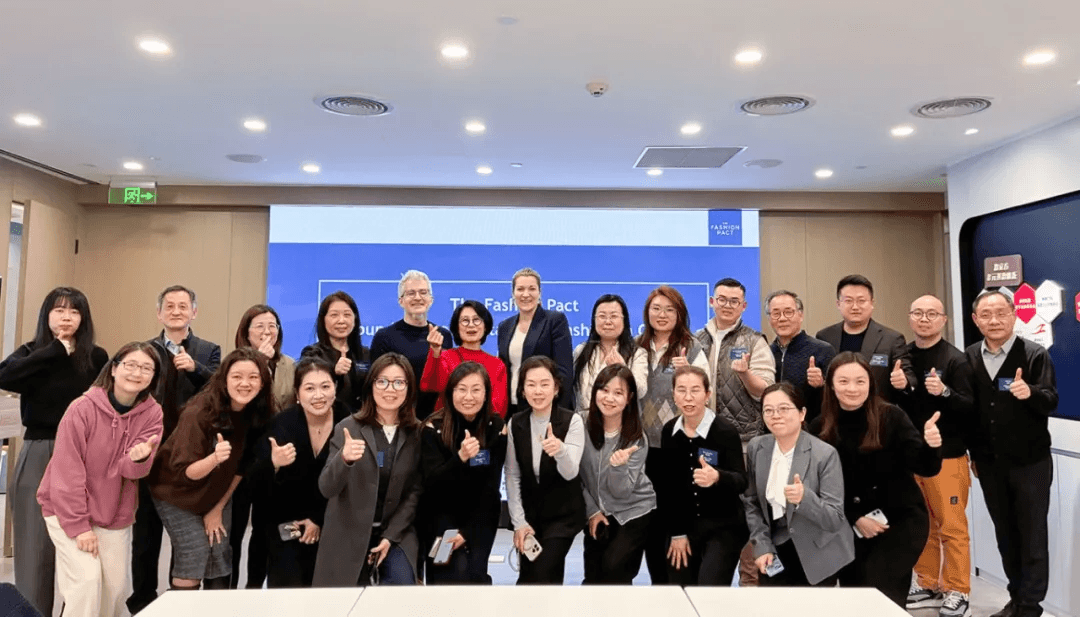
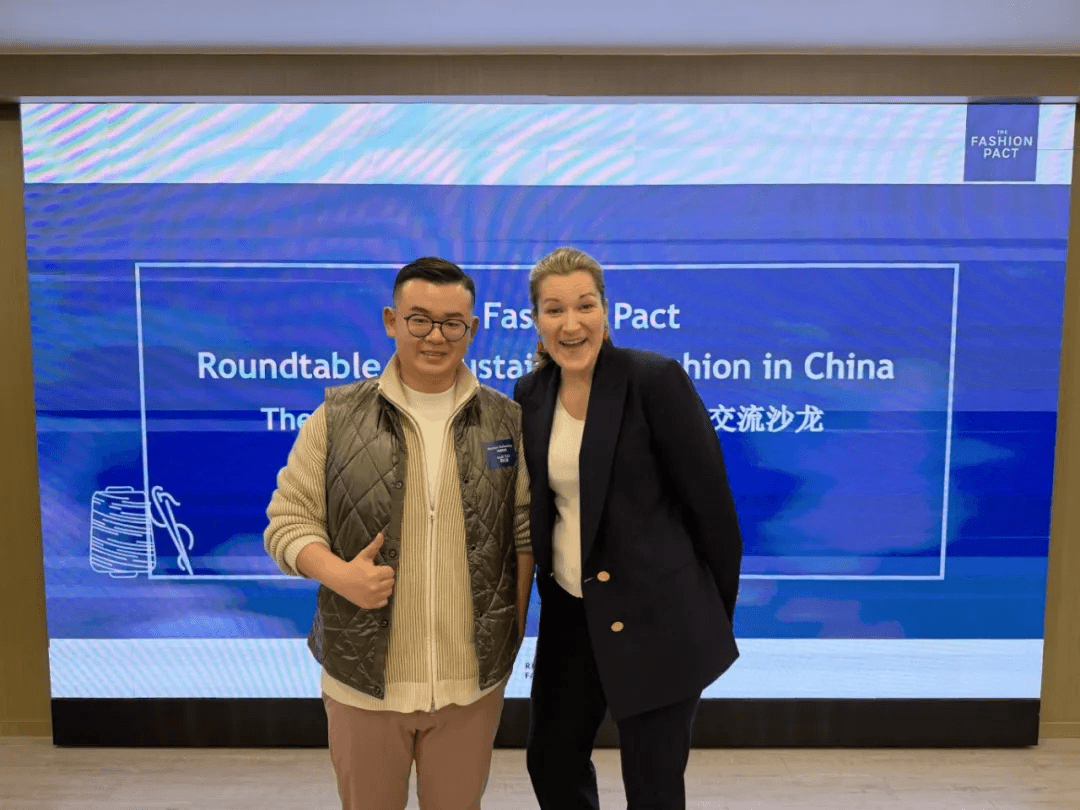
On March 5, The Fashion Pact China Sustainable Fashion Roundtable, organized by GREENEXT and co-hosted by Rethink Fashion and Kearney, was held at Plaza 66, Shanghai. Dr. Andy Tao, CEO of ValleyDelta, was invited to attend the event together with representatives from a number of leading companies across various sectors.
As an important part of this roundtable, Eva von Alvensleben, Executive Secretary and Executive Director of The Fashion Pact, shared the initiative’s mission and action framework.
The Fashion Pact was jointly launched in 2019 by French President Emmanuel Macron and François-Henri Pinault, Chairman and CEO of Kering Group, and is currently the world’s largest CEO-led sustainable fashion initiative.
The more than 160 member brands of The Fashion Pact represent approximately one-third of the global fashion industry. Focusing on the three key topics of climate action, biodiversity protection, and ocean conservation, it promotes the fashion industry’s systemic transformation on a global scale. Through mechanisms such as target alignment, data sharing, and cross-company knowledge exchange, The Fashion Pact continues to drive collaborative transformation across the entire value chain.
From Global Frameworks to China’s Practice: Sustainability as a Core Competitive Advantage
Dr. Zheng Hong, Founder of GREENEXT, the organizer of this event, pointed out that amid the accelerating global low-carbon transition and increasingly stringent regulatory environment, sustainability has gradually evolved from a “bonus point” in corporate social responsibility into a key capability that influences a company’s global competitiveness and long-term value creation. This roundtable aims to build a high-quality platform for in-depth exchange, enabling Chinese companies to reassess their positioning in a global context and seize transformation opportunities.
Ms. Eva von Alvensleben also emphasized in her remarks that the Chinese market plays a vital role in the global fashion supply chain system. The capabilities and potential demonstrated by Chinese enterprises in green manufacturing, material innovation, and large-scale transformation are of great significance to advancing the overall transformation of the industry.
Focus on Challenges: Building Collaborative Mechanisms for Value Chain Decarbonization
During the roundtable discussion, participants exchanged views on the practical challenges of sustainable transformation. Many companies noted that, in pursuing decarbonization goals, collaboration across the value chain continues to face implementation challenges; while the circular economy holds long-term significance, pathways for commercialization and scaling remain to be explored. At the same time, increasingly stringent compliance requirements in international markets are creating pressures on corporate costs and management systems. How to convert sustainability investments into brand value and market recognition has become a key concern for businesses.
Participants generally agreed that it is difficult for a single company to achieve systemic breakthroughs on its own. Only through industry collaboration, standards alignment, and data sharing can the transformation of the entire industry be advanced. At the same time, technological innovation is becoming a major driving force. From material innovation and AI-powered digital applications to new production technologies such as waterless dyeing, these developments are regarded as important pathways for reducing the environmental impact of manufacturing.
Ms. Eva von Alvensleben, Executive Secretary and Executive Director of The Fashion Pact, stated that China holds a key position in the global fashion supply chain system. Currently, approximately 59% of the world’s fashion products are manufactured in China, and China’s manufacturing capabilities and innovation potential will play an important role in advancing the industry’s sustainable transformation. She emphasized that sustainable transformation is already an ongoing reality and requires all stakeholders across the global value chain to advance it through collaboration and dialogue.
ValleyDelta: Building Sustainability on Efficiency
Dr. Andy Tao, CEO of ValleyDelta, stated during the discussion that sustainability should not come at the expense of efficiency or cost. What can truly drive industry transformation are technological solutions that can be scaled while balancing efficiency and environmental performance. Today, the global fashion industry is undergoing profound transformation. Sustainability is no longer just part of a brand narrative but is becoming an important foundation of production methods, supply chain systems, and business models. In this process, technology will become the key force driving industry transformation.
ValleyDelta has long focused on the textile printing and dyeing sector. Through its self-developed TDSD® (Textile Digital Smart Dyeing) green digital dyeing technology, it replaces traditional dyeing processes with advanced inkjet-based technology. While significantly reducing water consumption, energy consumption, and chemical usage, it maintains production efficiency and cost control, providing the industry with a practical and measurable pathway toward decarbonization.
In the future, ValleyDelta will continue to work with industry partners to promote the validation and large-scale application of TDSD® waterless dyeing technology, enabling sustainable fashion to truly achieve the unity of environmental responsibility, efficiency, and commercial value.
Let's Shape a Cleaner Future Together